Posts

HISTORY10 - Iberian Peninsula
Image
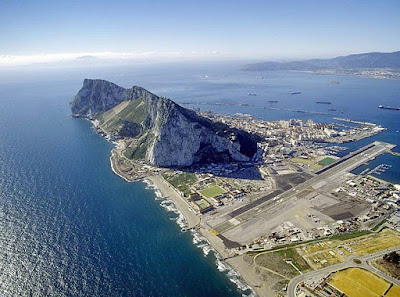
Pat is scheduled for a three-week trip to Portugal and Spain in late June and early July so I decided to do a little research and write a summary of Iberian Peninsula History before her trip. The Iberian Peninsula, also known as Iberia, is located in the southwest corner of Europe.   The peninsula is mostly divided between Portugal and Spain, but also includes the tiny Principality of Andorra, between France and Spain; and the British overseas territory of Gibraltar, on the southern tip of the Iberian Peninsula, at the entrance to the Mediterranean Sea.   The peninsula has an area of 230,400 square miles (slightly smaller than Texas).   The terrain of the Iberian Peninsula is largely mountainous, with the Pyrenees Mountains forming a natural border between Spain and France. Modern map of Europe and the Mediterranean area with the Iberian Peninsula at the southwest corner  of Europe.  (Courtesy of wpmap.org) First People (1.2 million years...
SCIENCE1 - The Story of Clouds

Image
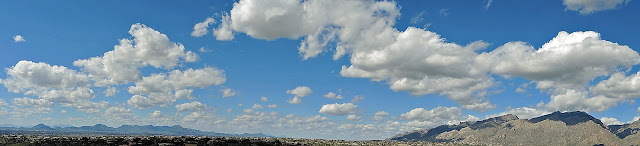
Pat and I live atop a ridge overlooking Tucson and the Catalina Mountains and I spend a lot of time appreciating the view, including frequent fascinating cloud formations.   So this blog is my attempt to understand how clouds work, the various types of clouds, and how they change.   My goal was to take all the cloud photos myself, from my backyard; but that’s going to take a while longer as targets of opportunity.   I’ll post this article as is and update it later when I get more of my photos.   A sweeping cloud panorama with Tucson in the distance at left and the Catalina Mountains at right. (Courtesy of Bob Ring) How Clouds Work Clouds   are made up of tiny colorless water droplets or ice crystals, sometimes a mixture of both.   The water droplets form around tiny particles of dust; sea salt; soot from wildfires, volcanoes, and fossil fuel burning; pollution; and certain plant bacteria.   These droplets are exceedingly small, averagi...